





Why Madagascar
Explore “the eighth continent” of the world for its epic biodiversity, untouched beaches and rich wildlife you will only see on this exotic island.
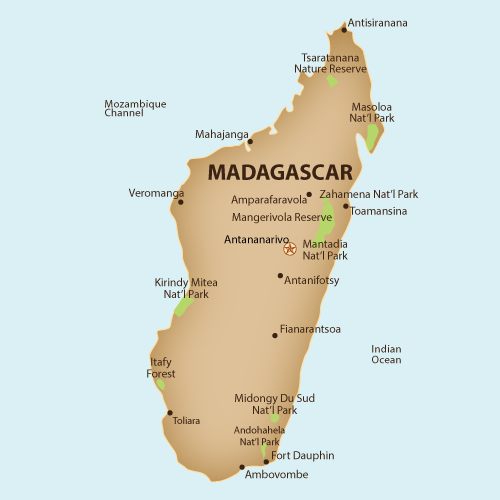
Madagascar is one of the world's most biodiverse destinations, home to an astonishing array of wildlife—around 90% of which is endemic and found nowhere else on Earth. From lush rainforests and dramatic limestone formations to ancient baobab forests and pristine coral reefs, the island offers extraordinary natural diversity. Search for playful lemurs, colorful chameleons, rare birds, and discover an island unlike anywhere else in Africa.
Quick Info
 Where to Stay: Accommodations range from charming boutique hotels and intimate luxury lodges to elegant beachfront resorts and family-owned properties. While generally more understated than the safari lodges of Southern Africa, they offer warm hospitality, unique character, and exceptional access to Madagascar's national parks, wildlife reserves, and pristine beaches.
 Game Viewing: Wildlife encounters in Madagascar are unlike anywhere else in Africa. Track ring-tailed lemurs through the forests of the south, listen for the haunting calls of indri in the rainforest, and search for sifakas, chameleons, rare frogs, endemic birds, and other unique species on guided day and night walks through the island’s diverse habitats.
 Getting Around: As the world's fourth-largest island, Madagascar is best explored by combining domestic flights with private road transfers. Scheduled flights connect many of the country's key regions, while charter flights may be used to reach more remote destinations. Once there, travelers explore with experienced local guides in comfortable 4x4 vehicles.
 Highlights: Encounter playful lemurs in their natural habitat, marvel at the iconic Avenue of the Baobabs, explore the dramatic limestone pinnacles of Tsingy de Bemaraha, discover lush rainforests, snorkel and dive vibrant coral reefs, enjoy seasonal whale watching, visit traditional villages and colorful local markets, and relax on idyllic beaches.
Explore our collection of thoroughly curated itineraries to ignite your imagination. Building on these ideas, we'll work with you to craft a tailor-made safari experience perfectly aligned with your preferences.
Weather
 HI/LoF
 Rainfall
Madagascar Safaris
10 days from $17,795 per person
Madagascar
TAILOR-MADE SAFARI | SAMPLE ITINERARY
Explore Madagascar’s wild beauty with stays at two exclusive private reserves: Mandrare River Camp in the southeast and Anjajavy in the northwest. This itinerary promises a captivating blend of wildlife encounters, cultural exploration, and coastal relaxation, ensuring a memorable discovery of Madagascar’s diverse landscapes and rich biodiversity.
12 days
Madagascar
Active
Adventure
Safari
TAILOR-MADE SAFARI | SAMPLE ITINERARY
Step into the magical world of Madagascar. This active adventure takes you in search of camouflaged chameleons, iconic lemurs, prized orchids and brilliantly plumed birds, with encounters across spectacular beaches, rain forests and some of the island’s most remarkable wild places.
7 days from $17,395 per person
Madagascar
Safari
Fly between Madagascar's top attractions on a chartered flight and marvel at the island's diverse landscapes and leaping lemurs. Experience its exotic beauty, from the iconic Avenue of the Baobabs with its ancient trees to the surreal Tsingy de Bemaraha, a UNESCO World Heritage site famous for its dramatic limestone spires and unique rock formations. Explore Isalo National Park, one of Madagascar’s most beloved parks, and immerse yourself in its breathtaking natural wonders.
Madagascar Safari Frequently Asked Questions
Madagascar is unlike anywhere else in Africa, with extraordinary landscapes, ancient forests, and wildlife found nowhere else on Earth. More than 80% of its species are endemic, making every journey a chance to discover rare lemurs, colorful chameleons, unique flora, and unforgettable natural wonders.
The best time to visit Madagascar is generally from April to November during the dry season, when temperatures are comfortable, wildlife viewing is excellent, and many roads are easier to access. September and October are especially popular for spotting young lemurs and enjoying pleasant weather. The wet season (December–March) brings heavier rains, particularly in the east, though some regions remain rewarding for travelers seeking fewer crowds and lush landscapes.
Madagascar is famous for its lemurs, with species ranging from playful ring-tailed lemurs to rare indri and sifaka. Travelers can also discover colorful chameleons, frogs, birds, reptiles, and unusual wildlife adapted to the island’s diverse habitats. The island’s forests, reserves, and national parks provide incredible opportunities for guided walks and close encounters with endemic species.
Most international travelers arrive in Antananarivo, Madagascar’s capital and main gateway. Flights typically connect through major hubs such as Addis Ababa, Paris, Johannesburg, or Nairobi. From Antananarivo, domestic flights and private transfers connect travelers to national parks, wildlife areas, beaches, and remote lodges throughout the country.
A typical Madagascar journey lasts 10–14 days, allowing enough time to experience several regions. Most itineraries combine wildlife viewing in national parks with cultural experiences, dramatic landscapes such as the Avenue of the Baobabs or Tsingy formations, and time along Madagascar’s beautiful coastline.
Guests can enjoy guided forest walks to search for lemurs and chameleons, explore dramatic landscapes like the Tsingy limestone formations, visit the iconic Avenue of the Baobabs, discover local villages and markets, enjoy beach escapes, snorkel and dive in tropical waters, and experience Madagascar’s incredible biodiversity through expert-led excursions.
Madagascar’s climate varies by region. The dry season (April–November) offers warm days, cooler evenings, and ideal conditions for exploring. Coastal areas are generally tropical and warmer, while the highlands around Antananarivo can be cooler. The wet season (December–March) brings higher temperatures, humidity, and tropical rains, especially along the eastern coast.
Madagascar pairs well with other Indian Ocean destinations such as Mauritius or Seychelles for a wildlife and beach combination. It can also be combined with mainland Africa destinations like South Africa, Kenya, or Tanzania for a diverse African journey.
Madagascar is ideal for travelers seeking a different kind of African adventure. While it does not offer the traditional Big Five safari experience found in East or Southern Africa, it provides something equally special: rare wildlife, incredible scenery, and immersive encounters with nature and local communities.
There is no single itinerary for Madagascar, as each journey is tailored to travelers' interests and the time available. Most visitors explore two or three distinct regions over 10–14 days. Popular combinations include the rainforests of Andasibe with the western highlights of Tsingy de Bemaraha and the Avenue of the Baobabs, or the spiny forests of the south paired with the tropical beaches of the north. Longer itineraries allow travelers to experience even more of the island's remarkable diversity.
Madagascar is the fourth-largest island in the world, and traveling between regions can involve long distances and challenging road conditions. The easiest and most efficient way to explore the country is by a combination of domestic flights and private transfers. Scheduled flights connect many key destinations, while private charter flights may also be arranged for greater flexibility. Once in each region, travelers typically explore by private vehicle with an experienced driver and local guides.
U.S. citizens require a visa to enter Madagascar. Tourist visas are available upon arrival for short stays, or travelers can obtain them in advance through the appropriate Madagascar embassy or consulate. Passport requirements and entry regulations should always be confirmed before travel.